Welcome to the Ruma National Park guide sable antelope searchers usually land on first, so here is the honest answer up front. Ruma does not hold sable antelope. It holds roan antelope, a different species, and it is the only place in Kenya where roan live wild. If you want wild sable antelope in Kenya, Shimba Hills National Reserve near Kwale holds the country’s only population, and we cover that below. The mix-up between roan and sable is common because the two animals look alike from a distance, both carrying long swept-back horns and a dark saddle of muscle over the shoulders. If sable antelope is specifically what you want, skip ahead to where we send you instead. If you want a park most repeat visitors to Kenya have never set foot in, keep reading.
Where Ruma Sits and How It Came to Be
Ruma National Park lies in the Lambwe Valley, tucked between the Gwasi Hills and the Kanyamwa Escarpment in Homa Bay County, on the eastern side of Lake Victoria. It covers about 120 square kilometers, making it one of Kenya’s smaller parks. Ruma was gazetted in 1966 as Lambwe Valley Game Reserve, then upgraded to national park status in 1983. The park was created largely to protect the last wild roan antelope population east of Lake Victoria, after the species vanished from the rest of its former Kenyan range through hunting and habitat loss.
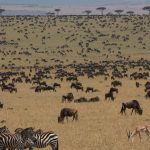
The valley floor is open savannah grassland ringed by riverine forest and acacia woodland, which is part of why it holds such a different bird list from the Mara or Amboseli. Few tour operators route clients through here, which is exactly the draw for a repeat visitor who has already done the Mara circuit and wants somewhere quieter.
The Roan Antelope: Kenya’s Rarest Grazer
Roan antelope (Hippotragus equinus) are Africa’s second-largest antelope after the eland. Adults stand about 1.3 meters at the shoulder, with a grey-brown coat, a pale belly, and a black-and-white face mask. Ruma is their last wild stronghold in Kenya.
The population is small and has stayed small for decades despite fencing and active management. Estimates put the number at fewer than 25 individuals, an indicative figure since KWS does not publish an annual public count specific to Ruma. Confirm current numbers with KWS or a local guide before you travel. Most of the animals stay within a fenced sanctuary of roughly 6.5 square kilometers, set aside within the park specifically to protect them from predation and poaching. That is a low number even for a rare species, and it means a sighting is never guaranteed on a single game drive. Rangers know the animals’ typical grazing areas within the sanctuary, so a guided drive with someone based locally improves your odds, but you should treat a roan sighting as a bonus rather than the reason to book the trip.
Ruma National Park Guide Sable Antelope vs Roan: What’s the Actual Difference
Both animals belong to the same genus, Hippotragus, and share the horse-like build that gives the group its name. The differences are visible once you know what to look for.
| Feature | Roan Antelope | Sable Antelope |
|---|---|---|
| Coat color | Grey-brown to reddish-fawn | Dark brown to black in mature males |
| Face | Black and white mask, tufted ears | Black and white mask, shorter ears |
| Horns | Shorter, more curved back | Longer, more dramatically arched |
| Where in Kenya | Ruma National Park only | Shimba Hills National Reserve only |
| Height at shoulder | About 1.3 m | About 1.35 m |
Sable antelope do live wild in Kenya, just not at Ruma. Kenya’s only wild sable antelope population lives at Shimba Hills National Reserve near Kwale, home to the Roosevelt’s sable subspecies. Roughly 100 individuals live there, and the reserve treats them as its signature conservation feature. Outside Kenya, wild sable are more common further south, in Tanzania’s Selous ecosystem and on into Zambia and Zimbabwe. If you have your heart set on seeing sable antelope in Kenya, Shimba Hills is the place to look, alongside our guide to other rare antelope species worth tracking down in Kenya, which covers greater kudu and other uncommon grazers within Kenya’s borders.
Beyond the Roan: Other Wildlife in Ruma
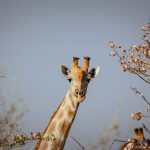
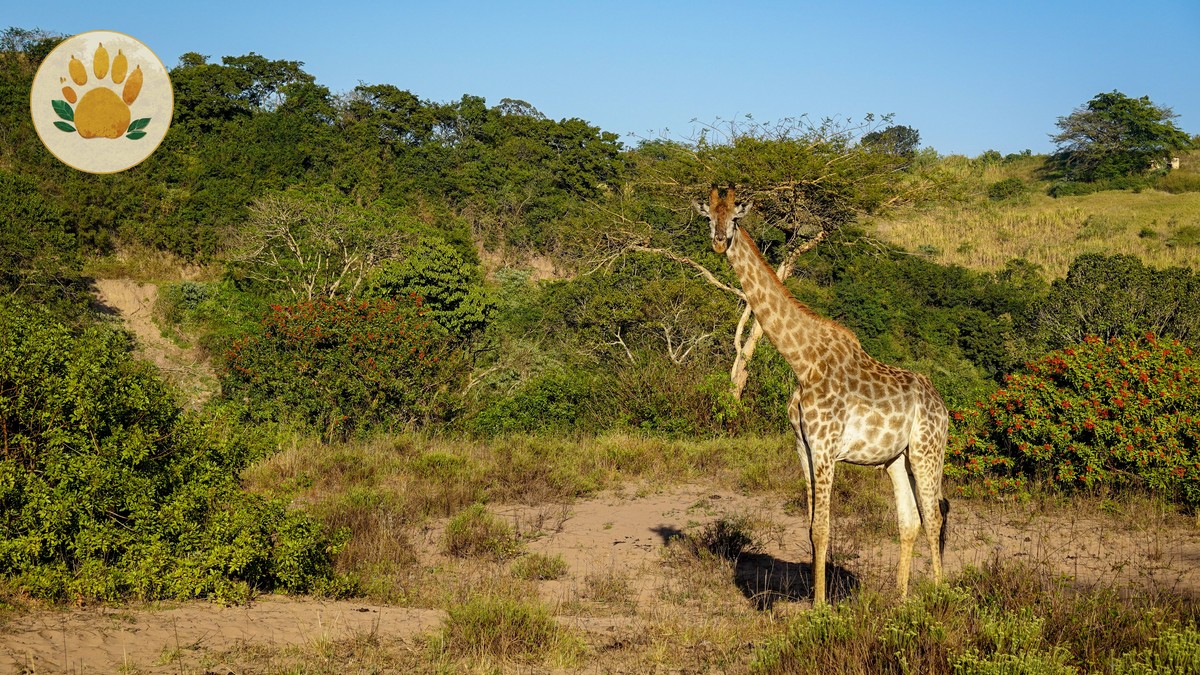
Roan antelope draw the headlines, but Ruma rewards patient watching with a broader cast. Rothschild’s giraffe were reintroduced here and now move through the acacia woodland in small groups. Jackson’s hartebeest, oribi, buffalo, and topi graze the open valley floor, and leopard move through the riverine forest edges, rarely seen but reported present in healthy numbers by rangers and local guides.
Birders get the strongest return on time here. Ruma is one of the few reliable Kenyan sites for the blue swallow, a globally threatened species that migrates from southern Africa and favors the park’s grassland between May and September. Add African fish eagle, various raptors, and a long list of woodland and grassland species, and a morning walk with a KWS guide can outproduce a game drive for variety.
Entry Fees and Cashless Payment
Ruma’s non-resident daily entry fee sits well below Kenya’s marquee parks, though KWS does not publish it as prominently as fees for Amboseli or Nakuru. Based on typical KWS pricing tiers for category-C parks, expect an indicative range of USD 30 to 40 per adult per day. Confirm the exact figure at the gate or through KWS directly before you travel, since this is a range rather than a confirmed rate.
All KWS parks, Ruma included, now require cashless payment through the Safaricom-linked Safari Card system or M-Pesa at the gate. If you have not used the system before, our guide on how KWS cashless payment works at the gate walks through setup before you arrive, since gate staff cannot process cash. For a sense of how Ruma’s fee compares with other parks you may already know, see how Ruma’s fees compare to other Kenyan parks.
| Park | Non-resident daily fee | Administered by |
|---|---|---|
| Ruma National Park | USD 30-40 (indicative) | KWS |
| Chyulu Hills National Park | USD 40 | KWS |
| Tsavo East / Tsavo West | USD 80 | KWS |
| Nairobi National Park | USD 80 | KWS |
| Amboseli National Park | USD 90 | KWS |
| Lake Nakuru National Park | USD 90 | KWS |
| Masai Mara National Reserve | USD 100 (Jan-Jun) / USD 200 (Jul-Dec) | Narok County Government |
Getting There
Ruma sits far from Nairobi and from the main safari circuit, which is part of its appeal for a visitor who wants distance from the crowds.
| From | Distance | Typical drive time | Notes |
|---|---|---|---|
| Kisumu | About 140 km | 2.5 to 3 hours | Via Homa Bay town, tarmac most of the way |
| Homa Bay town | About 40 km | 45 minutes to 1 hour | Closest town for fuel and supplies |
| Nairobi | About 380 km | 6.5 to 7.5 hours | Via Kisii and Homa Bay, or fly to Kisumu and drive |
Budget travelers can reach the park gate from Kisumu using public transport for roughly KES 500 total, combining a matatu to Homa Bay with a boda-boda for the final stretch to the gate. It takes longer than a private vehicle and requires some patience with schedules, but it is a real option if you are traveling light.
Self-drive is possible and the park roads are manageable in a standard 4×4 in dry weather. After rain, some sections of the valley floor turn slick with black cotton soil, so a high-clearance vehicle is the safer choice.
Where to Stay
Accommodation options near Ruma are limited compared to the Mara or Amboseli, which keeps visitor numbers low.
Oribi Guest House sits inside the park itself, run by KWS, with simple bandas and shared facilities. Rates run in the range of USD 25 to 40 per night depending on room type, a straightforward option if you want to be inside the gate at dawn. Ruma River Lodge, just outside the park boundary, offers a step up in comfort with en-suite rooms and a restaurant, priced around USD 60 to 80 per night for 2026. Both require advance booking since capacity is small.
Best Time to Visit
Ruma is drier and warmer than the highland parks, with two rainy seasons: March to May and October to November. The dry months of June through September and January through February give the best game viewing conditions and easier roads. For birders chasing the blue swallow specifically, aim for May through September, when the species is present in the park’s grassland.
Activities
Game drives cover the main valley circuit and the roan antelope sanctuary, usually two to three hours per outing. Guided walks with KWS rangers are available and are the best way to work through the bird list at a slower pace than a vehicle allows. There is no boat activity here, unlike some Lake Victoria-adjacent parks, since Ruma does not border the lake shoreline directly.
The SafariPure Difference
We would rather tell you that Ruma’s antelope is roan, not sable, and that fewer than 25 of them remain, than let you show up expecting an animal that has never lived here. We would rather send sable antelope seekers to Shimba Hills than let a mix-up ruin a trip. That same standard applies to every park we write about: real fee figures, real drive times, and an honest read on what you will and will not see. For a park like Ruma, where the marquee species is genuinely rare, we think that honesty matters more than a good story.
Frequently Asked Questions
Does Ruma National Park have sable antelope? No. Ruma protects roan antelope, a related but different species. Kenya’s only wild sable antelope live at Shimba Hills National Reserve, not at Ruma.
What is the difference between a roan antelope and a sable antelope? Roan antelope have a grey-brown coat and shorter, more curved horns. Sable antelope are darker, almost black in mature males, with longer, more sharply arched horns. Roan live in Kenya only at Ruma. Sable live in Kenya only at Shimba Hills National Reserve near Kwale.
How many roan antelope are left in Ruma National Park? Estimates put the number at fewer than 25, though KWS does not publish an official annual count for Ruma. Most stay within a fenced sanctuary of roughly 6.5 square kilometers inside the park. Confirm current numbers locally before you travel.
Where can you see sable antelope in Kenya? At Shimba Hills National Reserve near Kwale, the only place in Kenya with a wild sable antelope population. It holds the Roosevelt’s sable subspecies, with roughly 100 individuals.
What animals can you see in Ruma National Park? Roan antelope, Rothschild’s giraffe, Jackson’s hartebeest, oribi, buffalo, topi, leopard, and strong birdlife including the blue swallow in season.
How much does it cost to enter Ruma National Park? An indicative USD 30 to 40 per adult per day for non-residents, paid by Safari Card or M-Pesa at the gate. Confirm the exact rate with KWS before you travel.
How do you get to Ruma National Park from Nairobi or Kisumu? From Nairobi, about 380 km via Kisii and Homa Bay, roughly 6.5 to 7.5 hours by road. From Kisumu, about 140 km via Homa Bay, around 2.5 to 3 hours.
Where can you stay near Ruma National Park? Oribi Guest House inside the park, from about USD 25 to 40 a night, or Ruma River Lodge just outside, from about USD 60 to 80 a night.
What is the best time of year to visit Ruma National Park? June through September or January through February for drier roads and easier game viewing. May through September for blue swallow sightings.
Is Ruma National Park worth visiting? Yes, for a visitor who wants a quiet park with genuine rarity value and strong birding, not for a visitor who wants guaranteed big cat or antelope sightings.
Can you self-drive into Ruma National Park? Yes, in a standard 4×4 during dry weather. A high-clearance vehicle is recommended after rain due to black cotton soil.
Is Ruma National Park safe, and is there a malaria risk? The park itself is safe with standard game park precautions. The Lambwe Valley has a documented malaria risk, so anti-malarial precautions are recommended as they would be for most of western Kenya.
Plan Your Visit
Ruma rewards visitors who already know Kenya and want something genuinely different from the main circuit. If you want help fitting a roan antelope sighting and the blue swallow season into a wider Western Kenya route, get in touch through our contact page and we will help you build it properly.